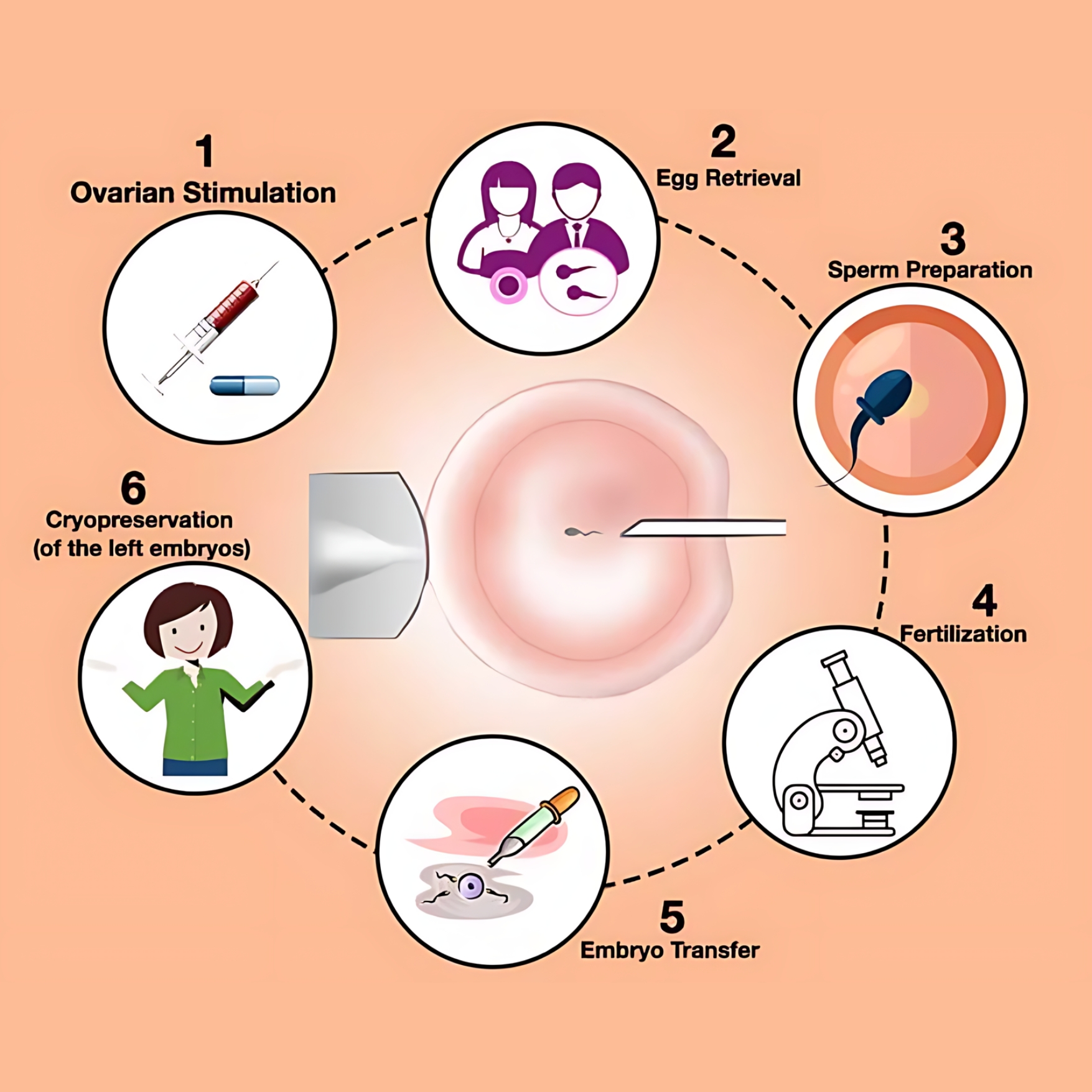
It is an IVF treatment used to address severe cases of male-factor infertility.
In this procedure, micro-manipulation tools and equipment’s are used to identify and remove individual sperm with a needle.
ICSI is recommended in cases of severe male infertility, previous fertilization failures with IVF or situations in which there are a limited number of oocytes available.
With the help of ICSI, fertilization is achieved and embryos continue to divide and are transferred into the uterus.
Although ICSI is recommended in case of male fertility, the doctor may still recommend it for couples that had not been successful with IVF.
Despite the advantages of this treatment, unfortunately, problems could arise during ICSI procedures. Getting a better understanding of ICSI risks and how they may impact you and your family can help you make an informed decision on whether or not to pursue this fertility treatment.
Some of the potential issues that could arise during the process are:-
Your eggs may become damaged.
The embryo might fail to grow after the fertilization.
In certain cases, the ICSI process might lead to higher rates of genetic defects compared to other fertility treatments.
But, the birth defects associated with ICSI can usually be fixed with surgery.